The exact line of code, backed by evidence.
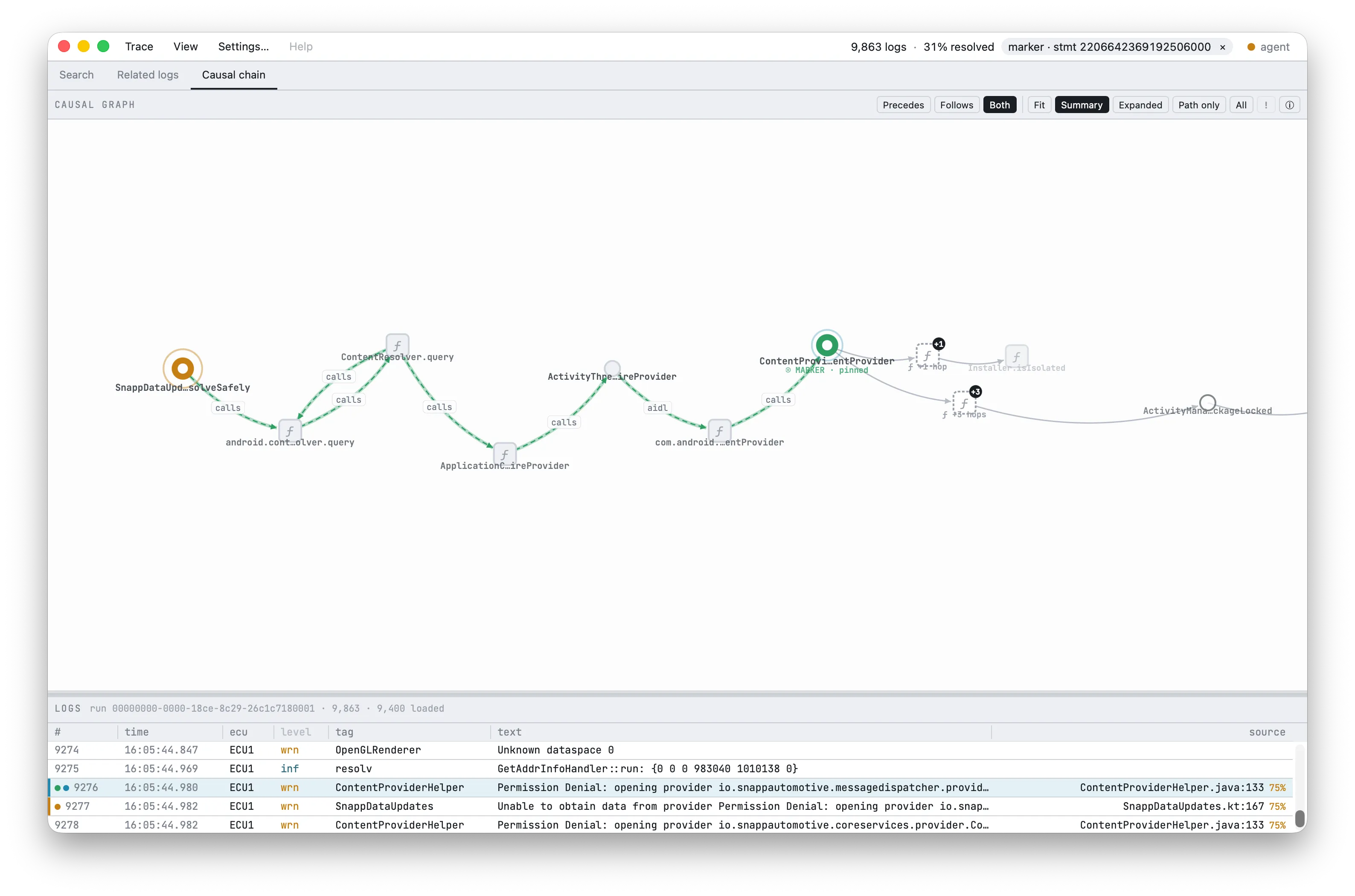
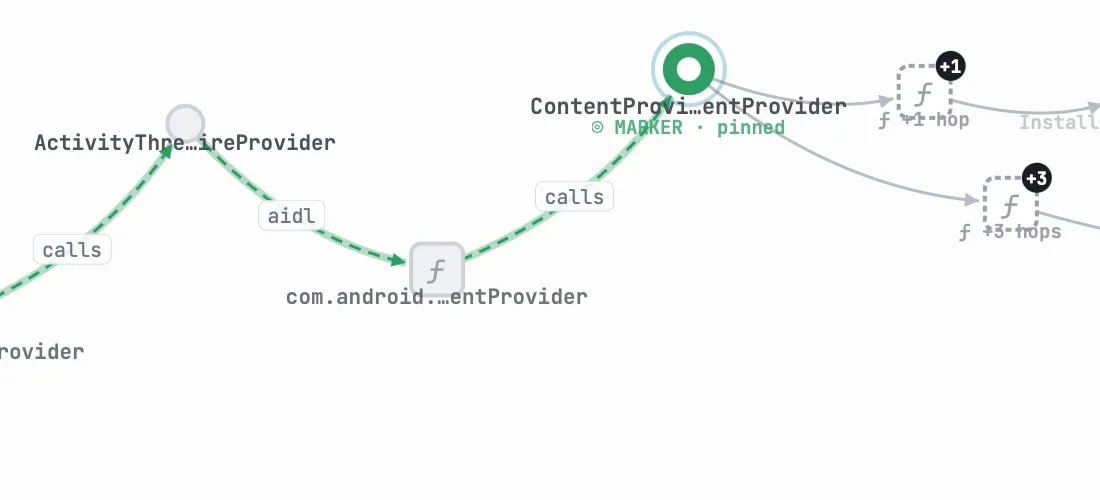
A causal chain, as in the view above.
From a log line to the code that caused it, with the evidence to prove it.
The exact line of code, backed by evidence.
A causal chain, as in the view above.
A set of candidates with confidence levels and evidence.
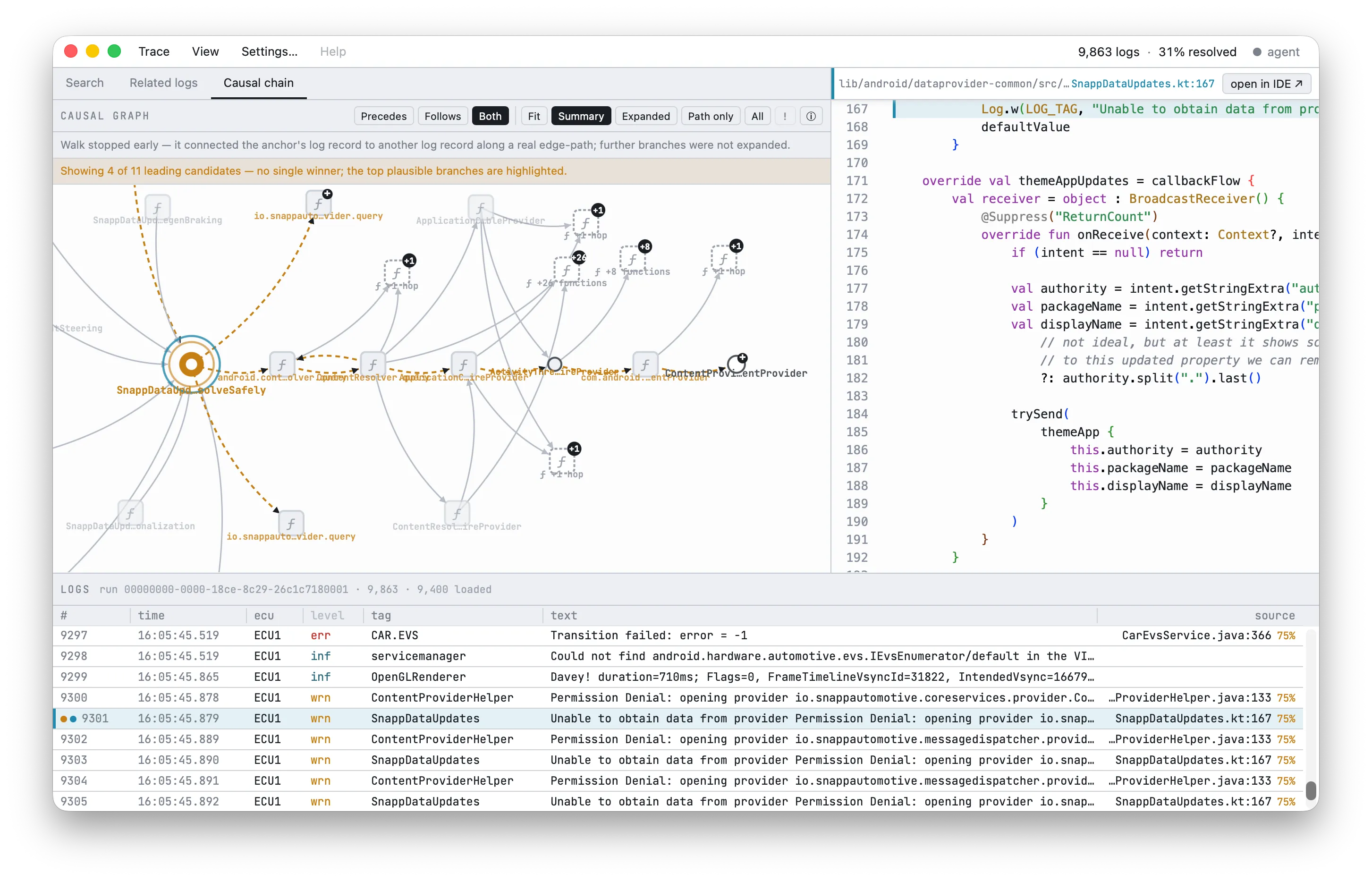
A highlighted area where visibility fades and further instrumentation is required.
This is slow, painstaking work only your experts could do manually. Now anyone on your team can move from a bug ticket to the next step.
Basset ingests your source and matches each runtime log line to the exact statement that produced it. No debug symbols needed. It then rebuilds the causal chain across process boundaries from what actually happened in the run, and you walk it clickably into the code. Every step is deterministic and inspectable: no hidden AI invents the answer.
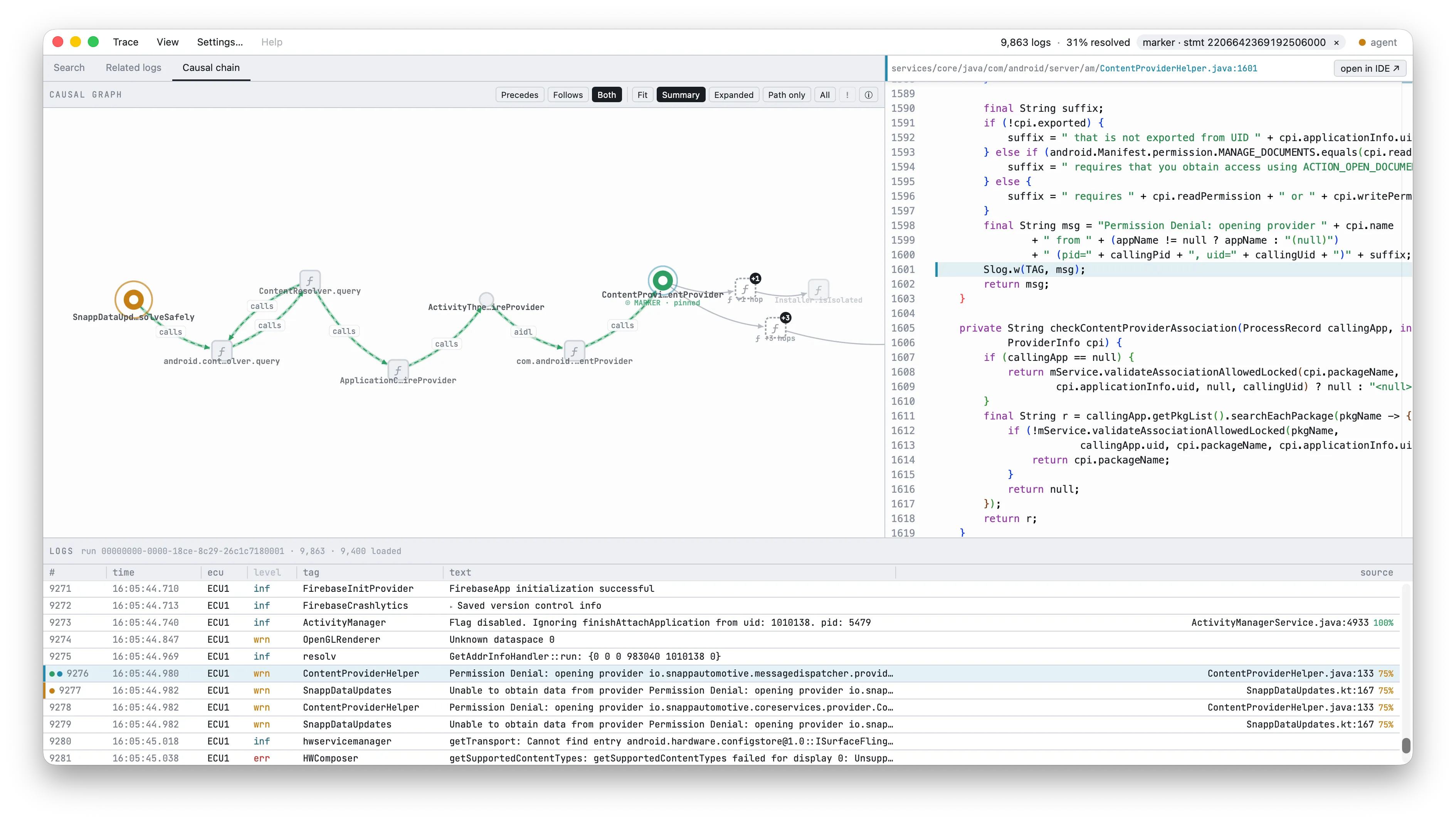
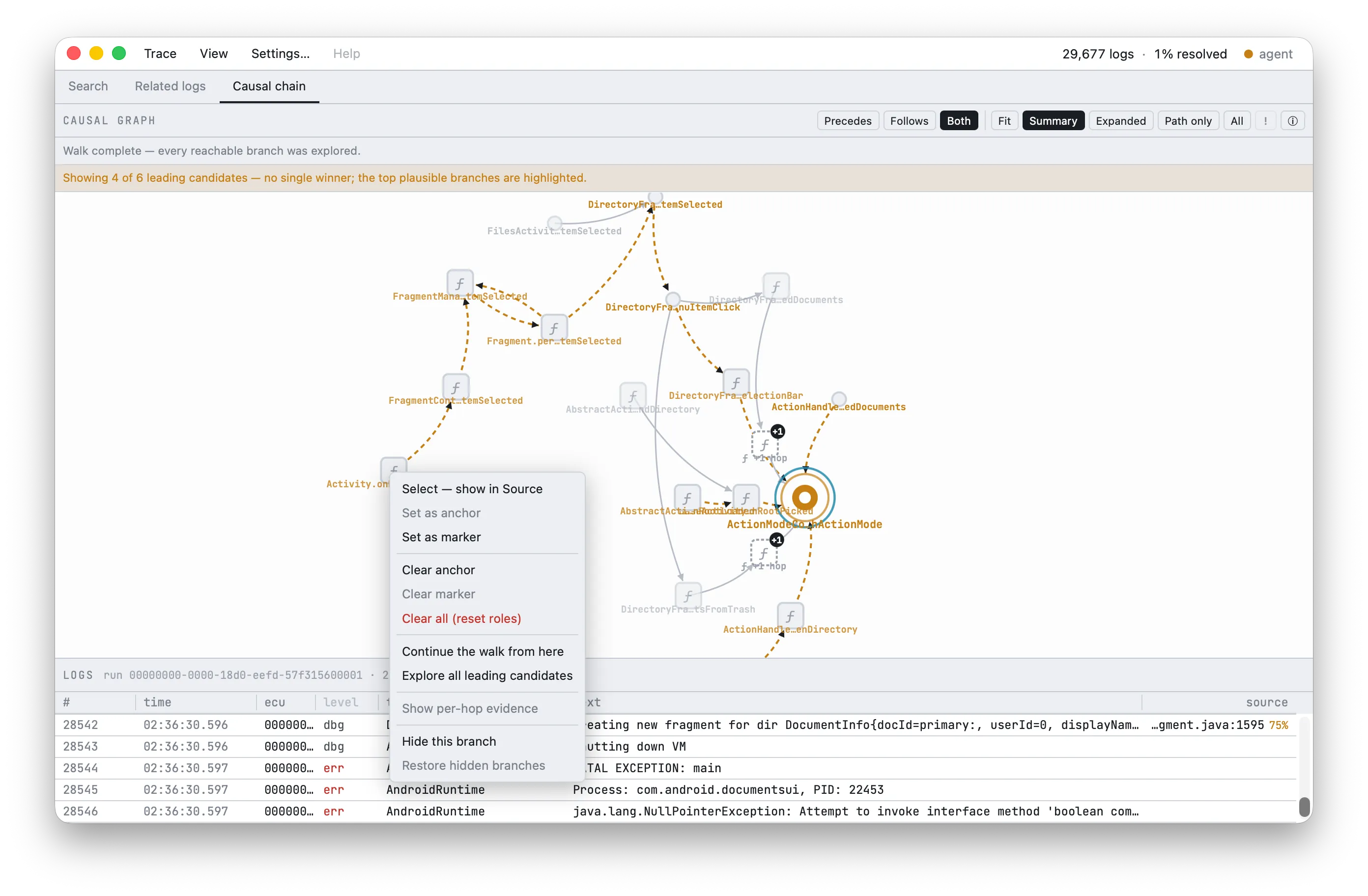
You drive the walk. The tool shows its evidence at every hop.
Before building Basset we studied the research on how developers actually find root causes. Three findings shaped the product:
Developers spend roughly half of debugging time hunting for the right code, not fixing it.
So Basset attacks the hunt: from a log line straight to the statement that wrote it.
Ranked lists of "suspicious lines" fail in practice; developers need the causal story, not a leaderboard.
So Basset shows a walkable chain of what happened, with evidence at each step.
Engineers distrust tools that hide their reasoning.
So every Basset answer traces back to real code and the real run, and the tool says honestly where its visibility ends.
A permission denial traced across processes, or a hard crash: seed the walk from any log record, including a stack frame.
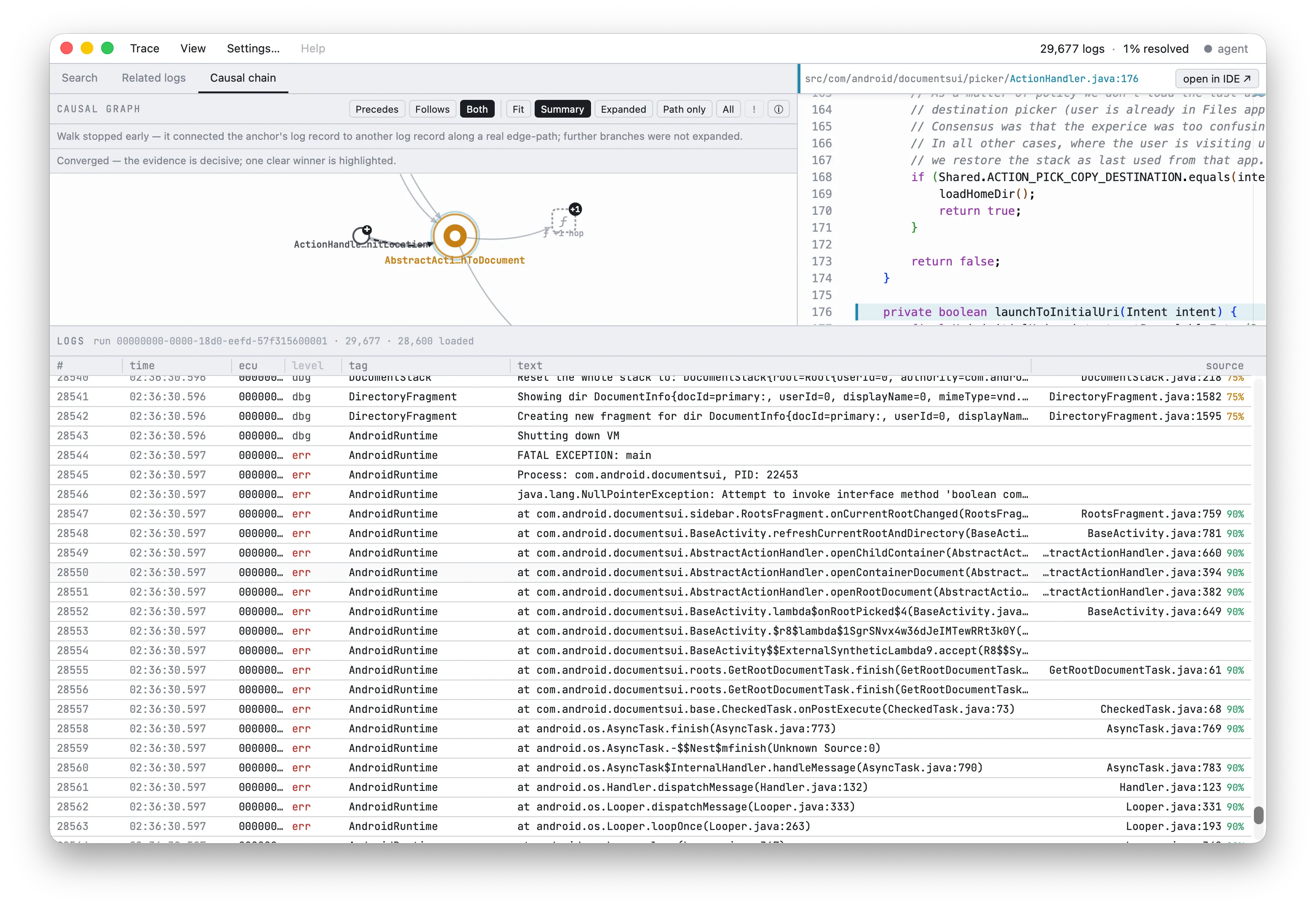
It starts where viewers stop.
It runs where you decide, and your source and logs stay under your control.
Deterministic evidence first, any AI sits on top to explain, never to invent.
Basset is in development and we are taking a small number of early partners. You bring real tickets with logs, we prove it on your hardest cases, and early partners pay roughly half the standard price for the first year.